Gavin Gardner earned his master’s degree in electrical engineering from Michigan State University, where his work in unmanned systems grew from NASA-funded research into the co-founding of AG3 Labs. Today, AG3 develops autonomous, attritable drone systems for military training and defense applications. The company was named one of four global winners of the U.S. Army’s 2025 xTechCounter Strike competition and received $350,000 to advance its technology.
“I’ve always had an entrepreneurial mindset, and that’s a big part of why I decided to stay at MSU to pursue my master’s in electrical engineering. I knew there was something worth pursuing in the work we had been doing with drones — we weren't just doing research for the sake of research, we were building real solutions and capabilities that could hold up in a fast-moving industry. Graduate school gave me the opportunity to keep working on it while figuring out what it could become.
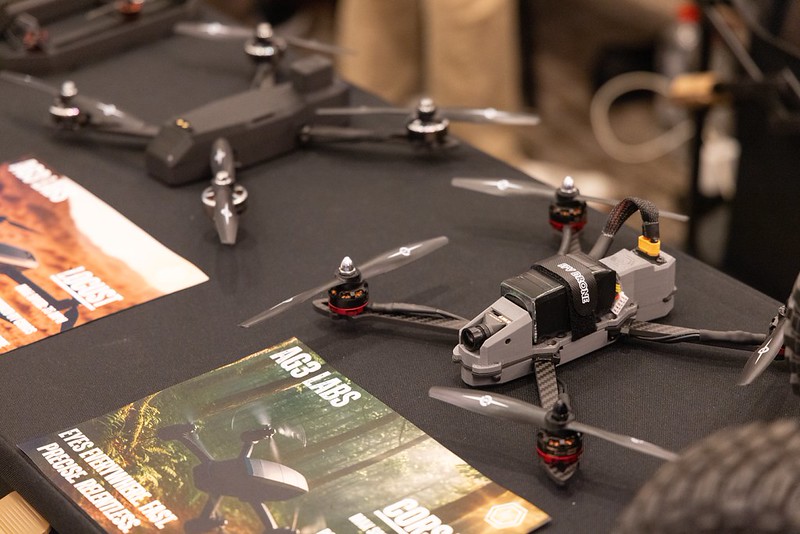
My interest in drones started long before graduate school. I grew up tinkering with remote control cars and helicopters, which eventually led me to join the Unmanned Systems Club at MSU. From there, I joined a NASA-funded research project called AIDED, which focused on developing autonomous drone technology. That work became the foundation for MSU DRIFT, a student-led research group focused on autonomous drone development. A few years later, our team secured a second NASA-funded project, Laser Energized Aerial Drone Systems (LEADS), focused on developing technology for longer-duration drone operations.
DRIFT was different from a typical student organization. It was student-led from the ground up. Every team member was paid, and we managed our budget much like a professional research lab. Both AIDED and LEADS were funded directly by NASA through the University Student Research Challenge (USRC).
For me, the most valuable part of LEADS wasn’t a single technical breakthrough. It was the people. I had the chance to work alongside some incredibly talented student researchers—Ross Davis, Rhett Pimentel, Nick Michaels, Yuchen Wang and Brady Berg, among others. They’re some of the sharpest engineers I’ve had the opportunity to work with.
We were also given a level of responsibility that you don’t always get as a student. We managed our own grant and budget while working through genuinely difficult problems. That gave us room to build, fail and figure things out on our own. More than anything, it taught me that you can’t solve advanced problems by yourself. You need a strong team around you.
That experience became the foundation for AG3 Labs. The same people I worked with on DRIFT and LEADS became my co-founders, so AG3 grew pretty naturally out of the research we had already been doing together. As we continued developing the technology, we started seeing opportunities to take what we had built beyond the university.
We started building initial prototypes of our target drone platform in the summer of 2024 after getting early interest from the Michigan National Guard. That early interest gave us a strong signal that technology we had been developing was solving a problem people actually needed us to solve.
That journey was also shaped by the people who supported us along the way. Dr. Wongkuul “Matt” Lee was my graduate school sponsor, and he played a major role in my decision to stay for graduate school. He pushed me to keep building and to see what I was capable of doing with the work.
Dr. Nelson Sepulveda and Dr. John Papapolymerou, both of the College of Engineering, were also important mentors. They helped me take what I was learning in the classroom and through research and apply it to problems outside of an academic setting. I’m grateful to everyone in the College of Engineering and across MSU who gave us the opportunity to do that work.
The Burgess Institute became another important part of that process. Paul Jaques was one of the first people we shared the idea with, and he supported us early on as we started figuring out what AG3 could become.
Through the Burgess Institute, we had support for early prototypes, travel to pitch competitions and the chance to compete at the Rice Business Plan Competition. We knew how to build the technology. Learning how to think about the business around it was a different challenge.
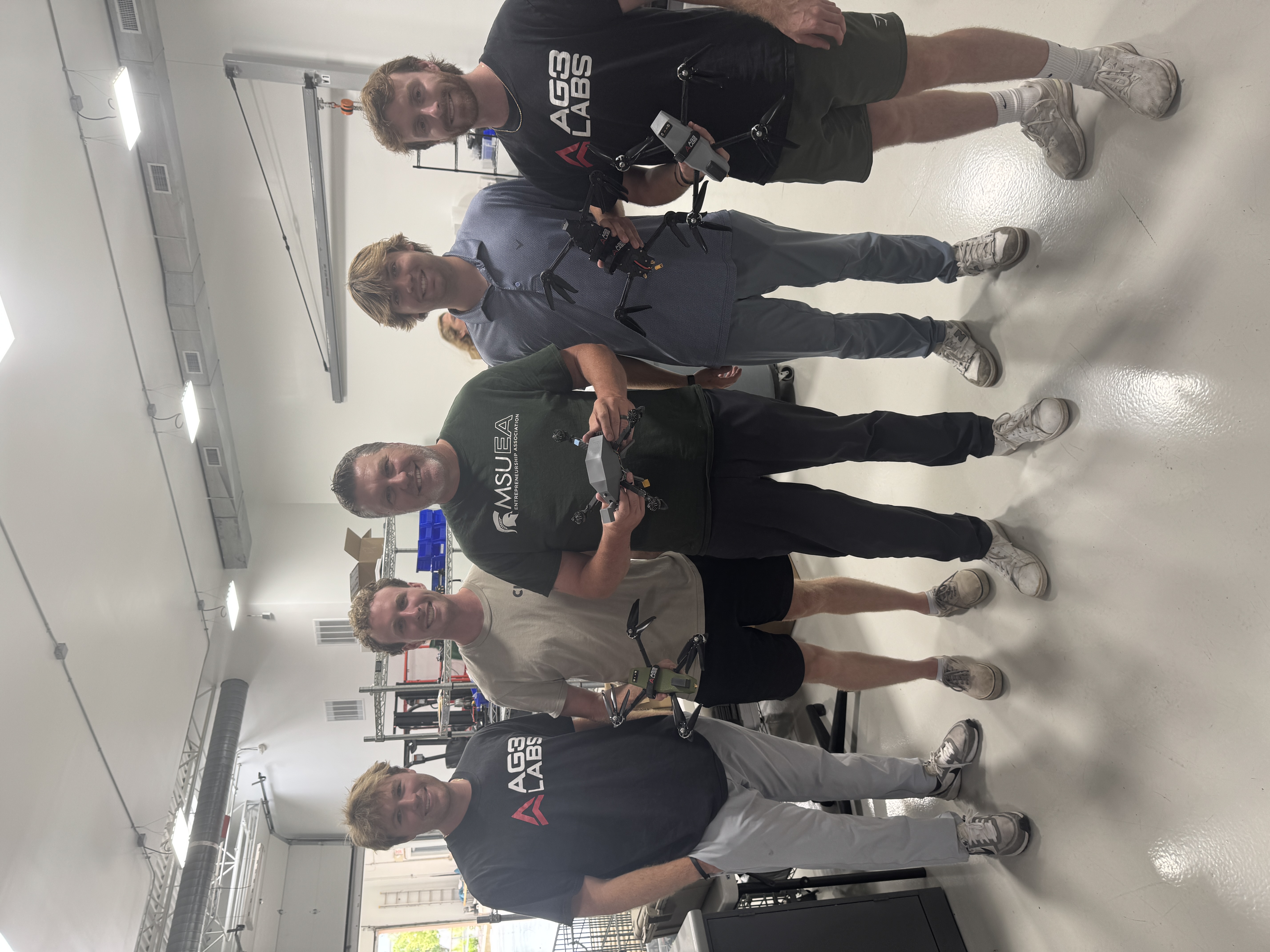
Looking back, there wasn’t one moment when everything came together. It was a combination of the research we were doing, the people we were working with, the opportunities that came along and a lot of trial and error. Today, our goal at AG3 is to build tools for the sUAS space that give warfighters an advantage in tomorrow’s challenges. We’re also working to expand domestic drone manufacturing capabilities.
Long-term, I want AG3 to become a leader in threat emulation, providing platforms to bases across the country that conduct C-UAS training. There’s still a long way to go, but that’s the direction we’re working toward.
For students interested in entrepreneurship, I think the biggest thing is to remember that a company is a way to solve a real problem at scale. It shouldn’t be the goal by itself. Become an expert in your niche, build a deep understanding of the problem you’re trying to solve and spend time with the people who are already working in that space. From there, find a problem you genuinely believe you can solve.
Take advantage of your time at MSU. Get involved in research, pursue internships and take what you’re learning in the classroom seriously. You never know where those experiences might lead or what they might give you the confidence to build next.”